Argentina stands as one of South America’s most diverse and captivating countries, offering international travelers an extraordinary blend of natural wonders, cultural richness, and unforgettable experiences. From the dramatic landscapes of the far south to the subtropical forests of the northeast and the high-altitude deserts of the northwest, this vast nation encompasses some of the continent’s most spectacular scenery.
For those planning a trip to Argentina, three spots are non-negotiable: the pristine expanses of Patagonia, the thunderous spectacle of Iguazú, and the historic soul of Salta. We’ve put together this guide to show you exactly why these locations remain the country’s most essential bucket-list destinations.
Patagonia: Where Glaciers Meet Adventure
Patagonia represents one of the planet’s last great wilderness areas, stretching across southern Argentina with landscapes that seem almost otherworldly in their raw beauty. This region encompasses vast steppes, towering Andean peaks, ancient glaciers, and crystalline lakes that have captivated explorers and travelers for generations. For international visitors seeking the ultimate Argentine adventure, Patagonia delivers an experience that exceeds even the most ambitious expectations.
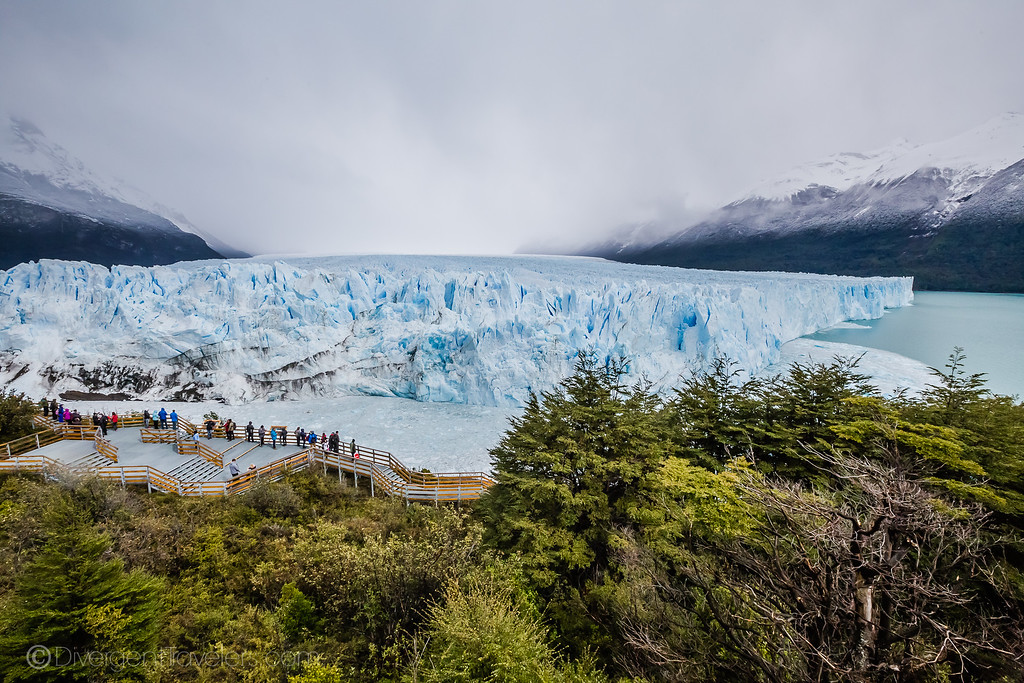
El Calafate and Perito Moreno Glacier
The town of El Calafate serves as the gateway to one of nature’s most impressive spectacles: the Perito Moreno Glacier. This massive ice formation, measuring approximately 250 square kilometers and rising up to 70 meters above the surface of Lake Argentino, represents one of the few advancing glaciers in the world. Unlike most glaciers that are retreating due to climate change, Perito Moreno maintains its equilibrium, creating a dynamic environment where visitors can witness the dramatic calving of house-sized ice chunks into the turquoise waters below.
The experience of standing on the viewing platforms at Perito Moreno provides an almost spiritual connection to the power of nature. The glacier’s brilliant white and blue hues create a mesmerizing visual display, while the thunderous cracks and booms of shifting ice echo across the landscape. For those seeking a more immersive experience, ice trekking excursions allow visitors to strap on crampons and walk directly on the glacier’s surface, exploring deep blue crevasses and ice caves that reveal the frozen water’s centuries-old secrets.
Beyond Perito Moreno, El Calafate offers access to other glaciers in Los Glaciares National Park, including Upsala and Spegazzini, which can be explored through full-day boat excursions. The town itself provides excellent dining featuring Patagonian lamb and regional specialties, along with comfortable accommodations ranging from budget-friendly hostels to luxury lodges. When coordinating complex itineraries that maximize glacier viewing opportunities while managing logistics in this remote region, experienced operators like 01Argentina Travel Agency can ensure seamless transitions between different experiences and optimal timing for photography and weather conditions.
El Chaltén: Trekking Capital of Argentina
Located approximately 220 kilometers north of El Calafate, the mountain village of El Chaltén has earned its reputation as Argentina’s trekking capital. This small settlement sits at the base of some of the most dramatic peaks in the Andes, including the iconic Mount Fitz Roy, whose granite spires pierce the Patagonian sky and have become one of the most photographed mountains in the world.
El Chaltén offers hiking opportunities for all skill levels, from gentle walks along river valleys to challenging full-day treks that climb to alpine lakes with panoramic mountain views. The trail to Laguna de los Tres provides arguably the most spectacular vista in Patagonia, with hikers rewarded after a steep final ascent with an up-close view of Fitz Roy’s granite needles reflected in the turquoise glacial lake below. The hike typically requires eight to ten hours round trip, making an early start essential for capturing the mountain bathed in dawn’s golden light.
Other notable trails include the path to Laguna Torre, which offers views of Cerro Torre, considered one of the world’s most difficult climbing peaks, and the Loma del Pliegue Tumbado trail, which provides sweeping panoramas of the entire Fitz Roy massif and the surrounding glacial valleys. The hiking season runs from October through April, with December through February offering the longest daylight hours and relatively stable weather, though Patagonia’s notorious winds can arise at any moment.
Bariloche and the Lake District
Further north in Patagonia, the city of San Carlos de Bariloche presents a different facet of the region’s character. Set on the shores of Nahuel Huapi Lake and surrounded by snow-capped peaks, Bariloche combines alpine scenery reminiscent of Switzerland with distinctly Argentine culture. The area is renowned for its chocolate shops, craft beer breweries, and outdoor recreation opportunities that span all seasons.
During summer months, visitors can explore the famous Seven Lakes Route, a scenic highway that winds through forests of southern beech trees past a series of pristine alpine lakes, each with its own unique character. Water sports enthusiasts enjoy kayaking, stand-up paddleboarding, and sailing on the region’s many lakes, while mountain bikers tackle trails through Nahuel Huapi National Park. Winter transforms Bariloche into Argentina’s premier ski destination, with Cerro Catedral offering extensive runs for all ability levels and stunning views across the lake-studded landscape.
The contrast between Patagonia’s different subregions makes it one of the best destinations Argentina offers, with each area providing distinct experiences that justify extended exploration. Multi-day Patagonian expeditions that combine El Calafate’s glaciers, El Chaltén’s mountains, and Bariloche’s lakes create comprehensive experiences of this remarkable region.
Iguazú Falls: Nature’s Most Powerful Spectacle
If Patagonia represents Argentina’s wild heart, then Iguazú Falls embodies its soul-stirring power. Located in the extreme northeast corner of Argentina where the country meets Brazil and Paraguay, Iguazú Falls consists of approximately 275 individual waterfalls spread across nearly three kilometers of the Iguazú River. The falls create one of the world’s most impressive natural displays, generating permanent mist clouds that nourish the surrounding subtropical rainforest and produce constant rainbows that dance through the spray.
The Argentine Side Experience
The Argentine side of Iguazú Falls provides intimate access to the waterfalls through an extensive system of walkways and viewing platforms built within Iguazú National Park. The experience is divided into three main circuits: the Upper Circuit, the Lower Circuit, and the highlight of any visit, the walk to Garganta del Diablo (Devil’s Throat).
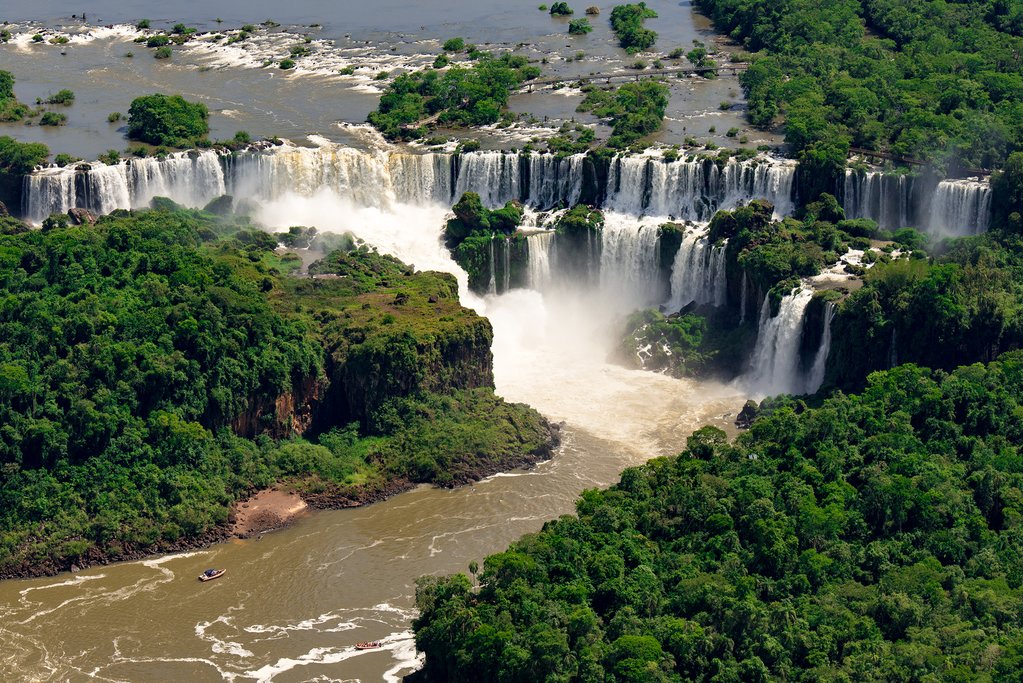
The Upper Circuit consists of elevated walkways that allow visitors to look down on many of the falls, providing a perspective on the water’s journey as it approaches the precipice and plunges into the river below. This vantage point reveals the falls’ scale and the lush vegetation of the surrounding rainforest islands. The Lower Circuit descends to the base of many waterfalls, placing visitors at water level where the spray creates a cooling mist and the thunderous roar of falling water becomes almost overwhelming.
The Garganta del Diablo represents Iguazú’s most powerful feature—a massive U-shaped chasm where roughly half the river’s flow plunges 80 meters in a deafening cascade that generates mist visible from kilometers away. A dedicated train and walkway lead visitors to a viewing platform suspended directly over the throat’s edge, creating an unforgettable encounter with nature’s raw power. The experience is visceral and humbling, with the water’s force creating wind-like currents that carry spray across the platform while rainbows materialize and dissolve in the perpetual mist.
Adventures Beyond the Falls
While the waterfalls themselves justify the journey to Iguazú, the surrounding region offers additional experiences that enhance any visit. Boat excursions venture under the falls themselves, providing an adrenaline-filled adventure as captains navigate powerful currents to bring passengers directly into the cascades’ spray zone. Participants should expect to get completely soaked in this thrilling encounter with the falls’ power.
The surrounding rainforest harbors remarkable biodiversity, with opportunities to spot toucans, coatis, capuchin monkeys, and countless butterfly species along the park’s trails. Guided nature walks reveal the forest’s intricate ecology and the adaptations that allow plants and animals to thrive in this moisture-rich environment. The nearby town of Puerto Iguazú serves as the base for explorations, offering accommodations ranging from budget hostels to the luxurious Hotel das Cataratas, which provides the unique privilege of accessing the falls outside regular park hours.
For travelers interested in cultural experiences, the region’s Guaraní indigenous heritage can be explored through community visits, while the Itaipu Dam on the Brazil-Paraguay border represents an impressive feat of engineering. The tri-border area also offers opportunities to briefly visit Brazil and Paraguay, with many visitors crossing to see the falls from the Brazilian side, which provides dramatic panoramic views that complement Argentina’s intimate perspectives. Coordinating border crossings and timing visits to both sides of the falls for optimal lighting conditions requires careful planning that professional travel services can facilitate.
Salta: Colonial Heritage and High-Altitude Wonders
While Patagonia and Iguazú showcase Argentina’s natural splendor, Salta reveals the country’s rich colonial history and indigenous heritage against a backdrop of stunning high-altitude landscapes. Located in northwest Argentina at an elevation of 1,187 meters, the city of Salta maintains its colonial architecture and traditional culture more completely than almost any other Argentine city, earning it the nickname “Salta la Linda” (Salta the Beautiful).
Colonial Architecture and Cultural Richness
Salta’s historic center enchants visitors with its well-preserved Spanish colonial buildings, centered around Plaza 9 de Julio, one of Argentina’s most beautiful main squares. The Catedral Basílica de Salta, with its pink facade and ornate interior, dominates the plaza, while surrounding colonial mansions house museums, restaurants, and shops showcasing regional handicrafts. The Museo de Arqueología de Alta Montaña (MAAM) presents one of Argentina’s most significant archaeological collections, including the remarkably preserved mummies of three Inca children discovered at an altitude of over 6,000 meters on nearby peaks.
The city’s cultural vitality extends to its peñas, traditional folk music venues where musicians perform chacareras, zambas, and other regional styles while diners enjoy empanadas salteñas and locro, a hearty stew that reflects the region’s indigenous and Spanish heritage. The atmosphere in these venues captures the warmth and pride of Salta’s people, who maintain strong connections to their traditions while welcoming visitors with genuine hospitality.
The Train to the Clouds and High-Altitude Landscapes
One of Salta’s most famous attractions, the Tren a las Nubes (Train to the Clouds), offers a spectacular journey through the pre-Andean mountains to altitudes exceeding 4,200 meters. Though the full train journey currently operates on limited schedules, the route to San Antonio de los Cobres by road follows the same dramatic trajectory, climbing through increasingly sparse landscapes where vicuñas graze and ancient geological formations create a palette of reds, oranges, and purples.
The journey culminates at the Viaducto La Polvorilla, an impressive railway bridge spanning a high desert canyon that represents one of Argentina’s most photographed engineering achievements. The thin air at this altitude reminds visitors they have ascended to heights where the boundary between earth and sky seems to blur, creating a sense of standing at the edge of the world.
Quebrada de Humahuaca and Cafayate Wine Region
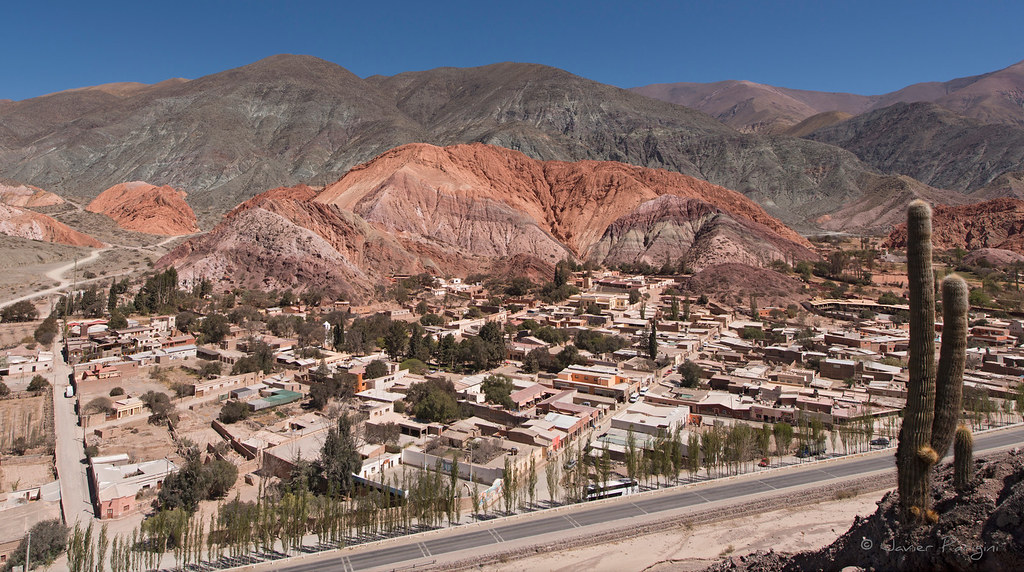
North of Salta, the Quebrada de Humahuaca stretches along Highway 9 through a UNESCO World Heritage-listed valley where dramatic rock formations display millions of years of geological history in stratified bands of color. Small villages along the route, including Purmamarca with its famous Cerro de los Siete Colores (Hill of Seven Colors), preserve indigenous Quechua traditions and offer handicraft markets where visitors can purchase woven textiles, ceramics, and silver jewelry.
South of Salta, the Calchaquí Valleys lead to Cafayate, Argentina’s second-most important wine region, renowned for high-altitude vineyards producing exceptional Torrontés, the country’s signature white varietal. The journey to Cafayate through the Quebrada de las Conchas reveals stunning red rock formations including the Amphitheater, the Devil’s Throat, and the Castles, natural sculptures carved by wind and water over millions of years. Wine tasting in Cafayate’s boutique bodegas, combined with the region’s clear skies and dry mountain air, creates an experience that appeals to both wine enthusiasts and nature lovers.
Salta’s combination of colonial charm, indigenous heritage, high-altitude landscapes, and wine culture establishes it as one of the best destinations Argentina offers for travelers seeking cultural depth alongside natural beauty. The region’s complexity and geographic spread benefit from expert guidance that connects historical context with practical logistics.
Planning Your Argentine Adventure
- Argentina’s immense size and geographic diversity present both opportunities and challenges for international travelers planning viajes a Argentina. The distance between destinations requires careful coordination of domestic flights, ground transportation, and accommodation bookings to create efficient itineraries that maximize experiences while minimizing transit time.
- The optimal time to visit varies by region. Patagonia’s season runs from October through April, with January and February offering peak weather but also peak crowds and prices. Iguazú can be visited year-round, though the falls run fullest from December through March during the region’s rainy season. Salta’s high-altitude locations are best visited from April through November to avoid summer’s intense heat and afternoon thunderstorms.
- Creating a comprehensive itinerary that includes Patagonia’s glaciers and mountains, Iguazú’s waterfalls, and Salta’s colonial heritage typically requires two to three weeks, allowing adequate time in each destination without excessive rushing. Travelers with limited time often choose two of the three regions, with Patagonia and Iguazú forming one popular combination and Salta and Iguazú forming another that avoids the long flights to southern Argentina.
- Professional travel agencies specializing in Argentina possess the local knowledge and industry connections to secure optimal accommodations, arrange reliable ground transportation, and provide English-speaking guides who bring destinations to life through their expertise. This support proves particularly valuable in remote Patagonia and the high-altitude regions around Salta, where logistics can be complex and local knowledge essential.
Conclusion: Argentina’s Unmatched Diversity
Few countries match Argentina’s geographic and cultural diversity, offering international travelers experiences ranging from pristine glacial wilderness to subtropical rainforests to high desert plateaus, all within a single nation. The three destinations explored in this guide—Patagonia’s dramatic landscapes, Iguazú’s natural power, and Salta’s colonial heritage—represent the best destinations Argentina offers, each providing distinct and unforgettable encounters with the country’s character.
These regions reward travelers who approach them with adequate time and proper planning, allowing the landscapes to unfold at their own pace and the experiences to resonate deeply. Whether watching house-sized chunks of ice calve from Perito Moreno Glacier, feeling the mist from Garganta del Diablo soak through clothing, or sipping Torrontés at sunset with the Andes glowing in the distance, Argentina creates memories that endure long after returning home.
For international travelers seeking authentic experiences in one of the world’s most captivating countries, Argentina delivers on every promise. The key to unlocking these experiences lies in thoughtful planning that respects the distances involved, understands seasonal considerations, and connects you with local expertise that transforms good trips into extraordinary journeys through some of the most remarkable landscapes on Earth.
For more information, visit www.01argentina.com and contact them.



You must be logged in to post a comment.