The Train to the Clouds: Everything You Need to Know Before You Board Argentina’s Most Legendary Railway Journey
One of the world’s great train rides — and the northwest experience that stays with travelers longest
There are train journeys that take you from one place to another. And then there are train journeys that take you somewhere entirely different — not just geographically, but in the way you understand what human beings are capable of building, and what the natural world is capable of producing. The Train to the Clouds — the Tren a las Nubes — belongs firmly in the second category. Departing from the colonial city of Salta and climbing through the Andes to a height of 4,220 meters above sea level, it is one of the highest railway journeys on the planet, and an experience that no amount of preparation fully prepares you for.
At 01 Argentina Travel Agency, the Train to the Clouds is one of our most requested northwest experiences. Year after year, travelers who have ridden the great railways of Europe, Asia, and North America tell us afterward that this was different — more raw, more dramatic, more genuinely moving. This guide explains everything you need to know before you go: what to expect, how to prepare, what you will see along the way, and how to make the most of every kilometer of the journey.
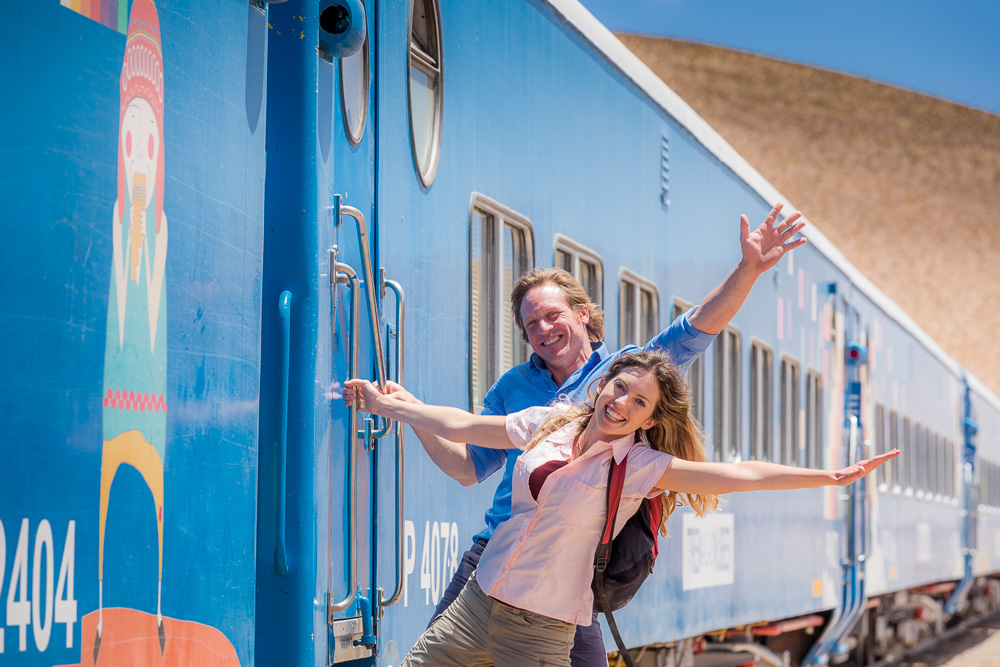
The History Behind the Railway: An Engineering Story Worth Knowing
To fully appreciate the Train to the Clouds, it helps to understand what it took to build it. The railway was conceived in the early 20th century as part of an ambitious plan to connect the Argentine lowlands with the Pacific ports of the northern coast — a transcontinental vision that would link Buenos Aires with the broader South American trade network through the Andean highlands.
Construction began in 1921 under the direction of American engineer Richard Fontaine Maury, and it would take nearly three decades to complete. The technical challenges were staggering. The line had to climb from Salta city at 1,187 meters to the altiplano at over 4,000 meters — a rise of more than 3,000 meters — without the benefit of rack-and-pinion mechanisms used in many mountain railways around the world. Instead, the engineers designed a system of 29 bridges, 21 tunnels, 13 viaducts, 2 loops, and 2 zigzags that allowed the train to gain altitude gradually through a series of extraordinary structural feats embedded into the mountain landscape itself.
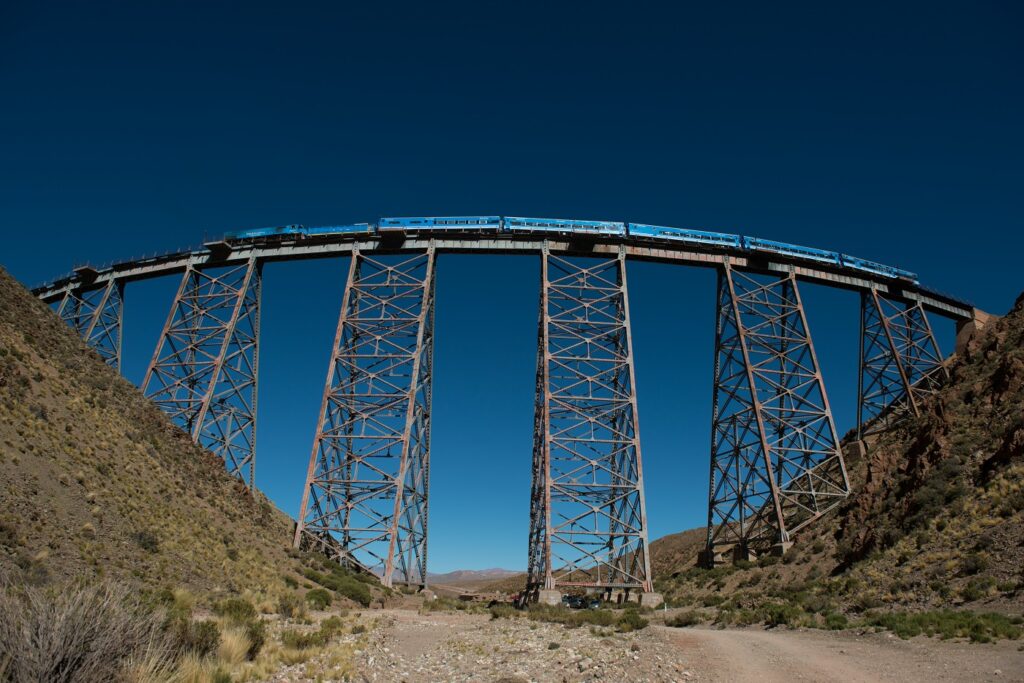
The most celebrated of these is the La Polvorilla Viaduct — a steel arch bridge stretching 224 meters across a high-altitude ravine at 4,220 meters above sea level — which has become the iconic image of the entire journey. Standing on the bridge, with the vast Andean plateau stretching in every direction and the thin Andean air filling your lungs, is one of those travel moments that simply cannot be replicated by a photograph, however good.
The line was completed in 1948 and officially inaugurated in 1948, though regular passenger service began in the 1970s. It received its evocative name — Train to the Clouds — from journalist Raúl Galán, who rode an early journey and wrote about the sensation of traveling through cloud cover so dense that the train seemed to float above the earth. The name stuck, and the railway has carried it ever since.
The Route: What You Will See from the Window
The journey begins at the Salta railway station — a beautifully restored building in the heart of the city — and follows the Rosario de Cachi river valley westward before beginning its dramatic ascent into the Andes. The full round trip covers approximately 434 kilometers and takes around 15 hours, making it a genuinely full-day commitment. But not a single kilometer of it is wasted.
The Valle de Lerma — the broad, fertile valley that surrounds Salta city — is the first landscape of the journey. Tobacco and pepper plantations stretch across the valley floor, framed by the first foothills of the Andes rising to the west. The pace of the train is deliberately unhurried, and this opening section allows travelers to settle in, observe the countryside, and begin to sense the gradual shift in landscape that will accelerate as the line gains altitude.
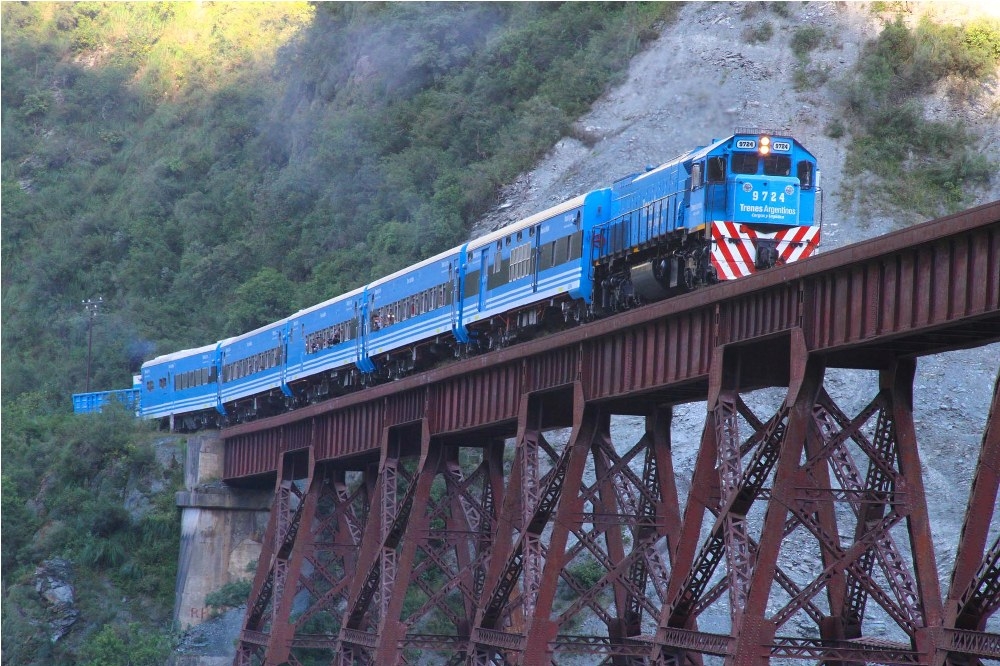
The Quebrada del Toro — the Gorge of the Bull — is where the journey announces itself. As the train enters this narrow canyon carved by the Toro river, the walls close in on both sides and the scenery becomes increasingly dramatic. Rock formations in shades of red, ochre, and purple tower overhead; the river rushes far below; and the first of the great engineering features — bridges and tunnels appearing at regular intervals — begins to reveal the extraordinary ambition of what was built here. This section of the journey draws cameras out of bags and keeps them there.
San Antonio de los Cobres is the principal stop along the route, a small town on the Andean altiplano at approximately 3,775 meters above sea level. It is a community shaped entirely by its extreme environment — spare, windswept, and quietly remarkable. A short stop here allows travelers to stretch their legs, purchase local handicrafts from vendors who gather at the station, and absorb the strange, clean quality of the high-altitude light. The landscape around San Antonio de los Cobres is pure altiplano: vast, flat, silent, and of a spare beauty that is completely unlike anything found at lower elevations.
The La Polvorilla Viaduct is the emotional and geographic climax of the journey. As the train approaches this extraordinary structure, passengers tend to go quiet in a way that says more than any commentary could. The viaduct stretches 224 meters across a yawning ravine, its steel arch rising 63 meters above the valley floor, at an elevation of 4,220 meters. The train crosses at walking speed, and the views from both sides — down into the ravine and out across the Andean plateau — are among the most dramatic available from any railway in the world.
A stop at the viaduct allows passengers to disembark, walk along the bridge, and spend time taking in the panorama. Local vendors set up at this stop, selling regional textiles and crafts, and the combination of the extraordinary setting, the thin air, and the physical presence of such an improbable structure tends to produce a kind of collective silence that veteran travelers recognize as the mark of a genuinely significant experience.
What It Feels Like at 4,220 Meters
No discussion of the Train to the Clouds is complete without an honest conversation about altitude — because at 4,220 meters, the thin air is a real and present reality that every traveler experiences differently.
At this elevation, the oxygen content of the air is roughly 40 percent lower than at sea level. Most travelers notice the effects within the first hour of reaching the altiplano: a mild headache, a slight breathlessness on any exertion, a curious heaviness behind the eyes, and occasionally a light dizziness when standing up quickly. For the majority of healthy travelers, these symptoms are manageable and temporary — they ease as the body begins to adjust, and they resolve completely on descent. For a smaller number of travelers, the effects can be more pronounced.
The most effective preparation is straightforward: hydrate aggressively in the days before the journey, avoid alcohol the night before, eat lightly on the day of departure, and move slowly and without rushing whenever you are at altitude. Mate de coca — the traditional coca leaf tea available throughout the northwest — is a widely used and genuinely effective folk remedy for altitude discomfort, and it is available on the train and at stops along the route.
The train itself carries medical oxygen and has staff trained in altitude-related first aid, which is standard practice for operators running high-altitude tourist services. At 01 Argentina Travel Agency, our team briefs every client thoroughly on altitude preparation before departure and remains available to answer questions and provide guidance throughout the journey.
It is also worth saying this: the altitude is not something to be feared, but something to be respected. Thousands of travelers of every age and fitness level ride this train every year and return describing it as among the most extraordinary experiences of their traveling lives. Proper preparation makes all the difference.
Combining the Train to the Clouds with the Full Northwest Tour
The Train to the Clouds is most rewarding when experienced as part of a broader northwest itinerary rather than as a standalone day trip. The reason is simple: the region surrounding Salta offers such an extraordinary concentration of remarkable destinations — Purmamarca and the Hill of Seven Colors, the Salinas Grandes, the UNESCO-listed Quebrada de Humahuaca, the wine valleys of Cafayate — that a traveler who has made the journey to this corner of Argentina deserves to see all of it.
At 01 Argentina Travel Agency, we design northwest packages that integrate the Train to the Clouds with the full range of Salta and Jujuy experiences, across four to five days that cover the colonial city, the high-altitude salt flats, the colored canyon valleys, the Andean villages, the Calchaquí wine region, and the railway journey itself. Each element complements the others, building a picture of the northwest that is far richer and more complete than any single excursion could provide.
Our packages include return flights from Buenos Aires, all airport and hotel transfers, accommodation in carefully selected hotels ranging from comfortable four-star properties to luxury options including the Sheraton Salta, daily guided excursions with English-speaking guides, and all applicable taxes. Everything is handled — the logistics, the tickets, the timing, the local knowledge — so that the traveler’s only responsibility is to arrive ready to be astonished.
Practical Information Before You Board
Journey duration: The full round trip from Salta covers approximately 434 kilometers and takes around 15 hours including stops. Departures are typically in the early morning, with return to Salta in the evening.
What to wear: Dress in layers. Salta city in the morning may feel warm, but the temperature at 4,220 meters can drop significantly, particularly when standing on the viaduct in the Andean wind. A warm jacket, a hat, gloves, and sun protection are all essential — the high-altitude sun is considerably more intense than at sea level.
What to bring: Water — a great deal of it — plus light snacks, sun cream with high SPF, sunglasses, any personal medication, and a camera with a fully charged battery. The journey provides almost continuous photographic opportunities, and running out of battery before the La Polvorilla Viaduct would be a genuine regret.
Availability: The Train to the Clouds does not operate daily, and schedules vary by season. 01 Argentina Travel Agency coordinates all bookings and timing as part of every northwest package, ensuring that the train journey is seamlessly integrated into your overall itinerary without scheduling conflicts.
FAQ: Train to the Clouds
Q: Is the Train to the Clouds suitable for children?
Yes, with appropriate preparation for altitude. Children are generally more sensitive to the effects of reduced oxygen than adults, and it is important to monitor them carefully throughout the ascent. Many families with children of school age and older complete the journey without difficulty. We recommend discussing your children’s specific ages and health with our team at 01 Argentina Travel Agency before booking, so we can advise on the most appropriate approach.
Q: Do I need to be physically fit to ride the Train to the Clouds?
The journey itself requires no physical exertion beyond walking short distances at stops. The primary consideration is how your body responds to altitude, which is largely unpredictable and not related to fitness level. Even very fit travelers can experience altitude symptoms, while older or less active travelers sometimes feel no ill effects at all. Listening to your body, moving slowly, and staying well-hydrated are the most important factors.
Q: Can I visit the Train to the Clouds without booking a full tour package?
It is possible to arrange the railway journey independently, but it requires navigating ticket availability, transport to and from the station, altitude preparation without local guidance, and the logistics of a 15-hour day in a region you may be unfamiliar with. Our experience at 01 Argentina Travel Agency is that travelers who combine the train with a full guided northwest package have a significantly richer and more comfortable experience — and they arrive at the La Polvorilla Viaduct having already spent two or three days acclimatizing to the region’s altitude, which makes a genuine difference to how they feel at the top.
Q: What happens if I feel unwell during the journey?
The train carries medical oxygen and trained staff for exactly this situation. If a traveler experiences significant altitude discomfort, the standard and effective treatment is supplemental oxygen followed by descent, which the return journey provides naturally. Our guides are experienced in recognizing and responding to altitude-related symptoms and will always prioritize the wellbeing of every traveler in the group.
Q: How does the Train to the Clouds fit into a broader Argentina itinerary?
The northwest fits naturally alongside Buenos Aires as a starting and ending point, and can also be combined with Iguazú Falls, Mendoza’s wine country, Patagonia, or a Bariloche lake district visit as part of a longer journey through Argentina. At 01 Argentina Travel Agency, designing multi-destination itineraries that make the most of every day in this remarkable country is precisely what we do — and the northwest, with the Train to the Clouds at its heart, is always one of the most memorable chapters in any Argentina journey.
Thinking about boarding the Train to the Clouds? Contact 01 Argentina Travel Agency today and let our northwest specialists plan every detail of the journey — from your first morning in Salta to your last sunset over the Andes.



You must be logged in to post a comment.